Optical Fiber sensors

Our group develops advanced optical fiber sensing technologies that integrate engineered photonic platforms with application-specific transduction materials, enabling high-sensitivity, and remotely interrogated measurements in demanding environments. Leveraging long-standing expertise in interferometric configurations and grating-based platforms, we design and implement robust sensing probes tailored to environmental monitoring, precision agriculture, industrial process control, structural health monitoring, and biomedical diagnostics. Our approach emphasizes quantitative performance, field validation, and scalability toward real-world deployment.

Precision Agriculture with Optical Fiber Sensing

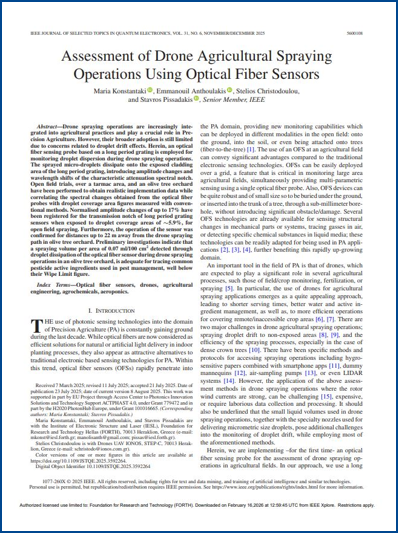
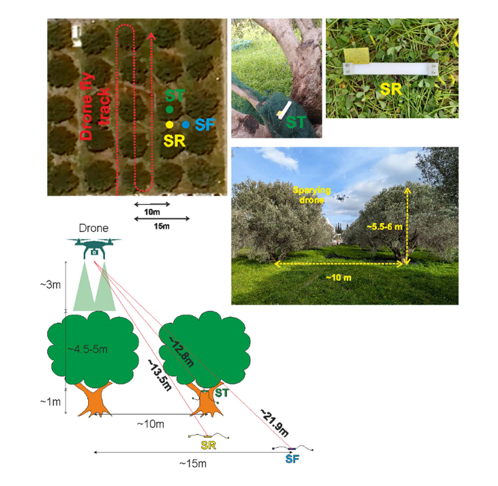
We recently demonstrated Long period Grating (LPG) based optical fiber probes for in situ assessment of drone spraying operations. The technology enables quantitative evaluation of droplet drift and surface coverage directly under field conditions. The sensors were deployed in open-field and olive orchard scenarios, positioned on the ground, within tree canopies, and at remote lateral distances to spatially map droplet dispersion during realistic spraying protocols. 

This work supports data-driven optimization of agrochemical application and drift mitigation strategies.

Olive tree orchard field tests

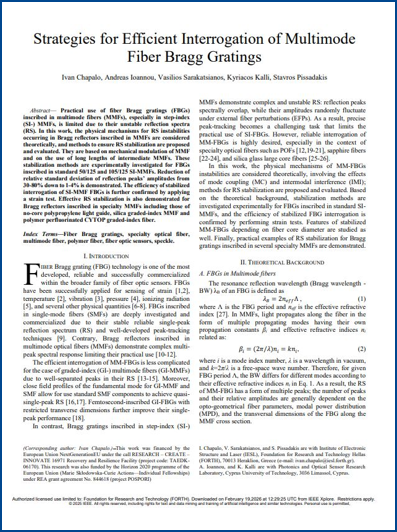
Strategies for Efficient Interrogation of Multimode Fiber Bragg Gratings

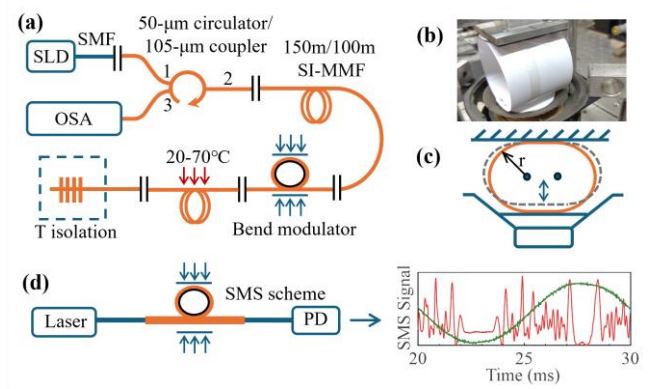
A recent work addresses reflection spectrum instabilities in fiber Bragg gratings (FBGs) inscribed in step-index multimode fibers (SI-MMFs), identifying the underlying physical mechanisms and proposing practical stabilization techniques. By applying controlled mechanical modulation and incorporating intermediate MMF sections, reflection peak amplitude fluctuations are reduced from 30–80% to as low as 1–4%. The methods are validated experimentally on standard and specialty multimode fibers, including graded-index and polymer fibers.

These advances significantly enhance the reliability of multimode FBG interrogation, expanding their applicability in robust and cost-effective optical fiber sensing systems.

Schematic of the experimental setup

Environmental Monitoring Systems Using Fiber Optics

By integrating functional transduction layers with tailored fiber architectures, we develop high-resolution optical platforms for real-time monitoring of hazardous vapors and volatile organic compounds (VOCs).

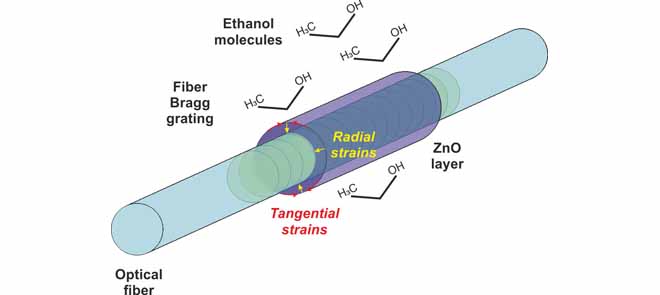
Sensor schematic

A zinc oxide (ZnO) nanolayer deposited on a fiber Bragg grating enables room-temperature detection of alcohols and acetone at concentrations below 25 ppm. The sensing mechanism relies on chemostriction-induced strain in the ZnO film, generating Bragg wavelength shifts through a piezotronic effect. X-ray diffraction measurements confirm lattice contraction under vapor exposure, while numerical modeling correlates chemo-mechanical strain transfer to the optical response, validating the multi-physics transduction pathway.


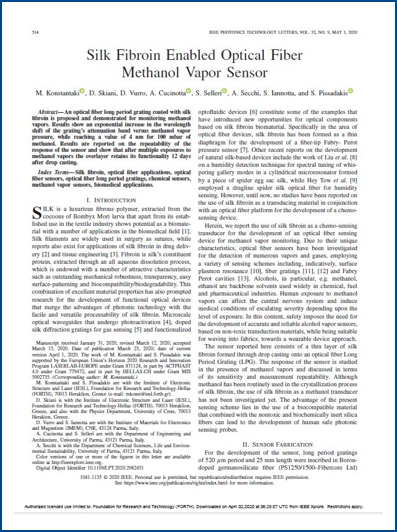
We have also developed a biopolymer-enabled LPG sensor functionalized with silk fibroin for selective methanol vapor detection. The device exhibits stable and repeatable operation over multiple exposure cycles, retaining functionality for at least 12 days post-fabrication. This approach demonstrates the feasibility of sustainable, bio-derived materials in advanced chemical sensing systems.

Optical Fiber Sensors for Biomedical Applications

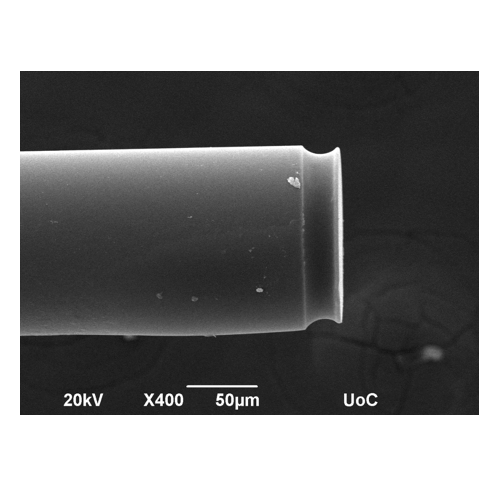
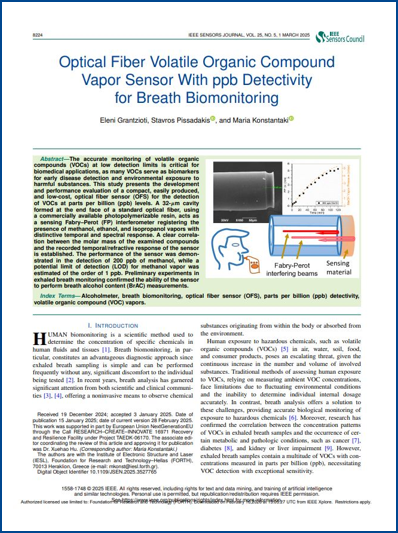
We have developed highly sensitive fiber-optic platforms targeting VOC detection for breath biomonitoring applications. Using fiber end-face Fabry–Pérot microcavity architectures, we demonstrated ppb-level vapor detectivity, meeting the stringent sensitivity requirements of non-invasive breath analysis.

Preliminary breath-monitoring studies confirmed the capability of our sensors to quantify breath alcohol content (BrAC), highlighting their translational potential toward compact, portable diagnostic and exposure-assessment devices.

SEM image of  the sensing cavity at the fiber end face

Structural Health Monitoring of Composite Shafts with optical fibers

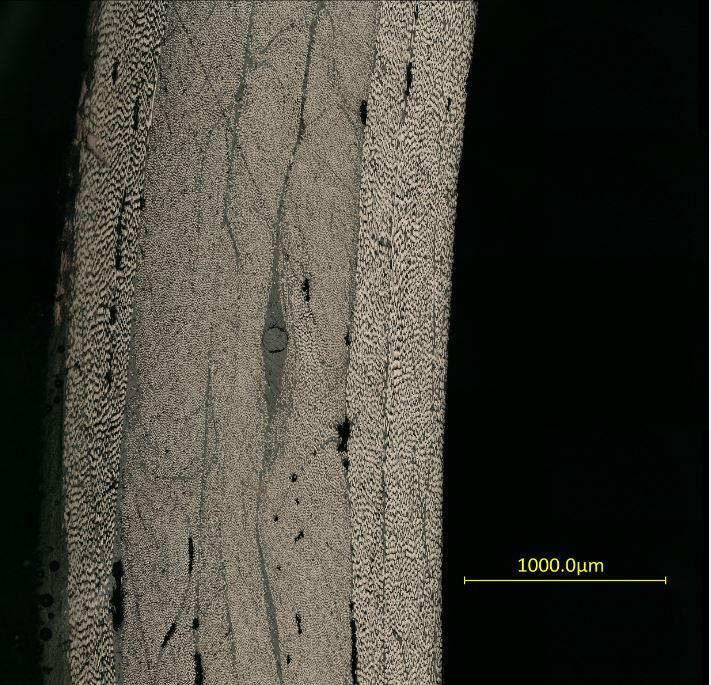
Microscope images of the embedded fiber

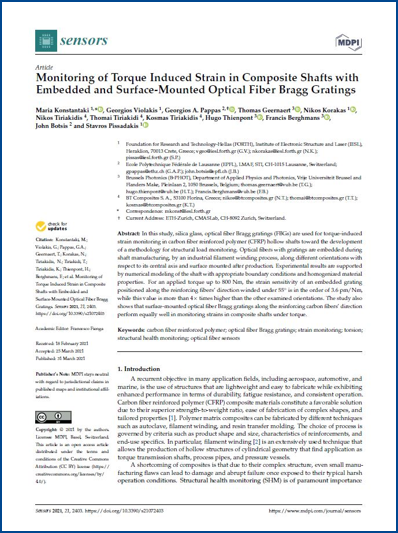
In collaboration with our industrial partner, BT Composites, we developed a methodology for real-time torque-induced strain monitoring in hollow carbon fiber reinforced polymer (CFRP) shafts using fiber Bragg gratings.

Sensors were integrated both through embedding during industrial filament winding and via post-production surface mounting. The study demonstrates that strain sensitivity is strongly dependent on alignment with the reinforcing carbon fibers, with optimized orientation enabling accurate load transduction. Experimental findings, supported by numerical modeling, confirm the effectiveness of FBG-based sensing for structural health monitoring and quality assurance in aerospace, automotive, and marine rotating systems.

relevant Publications

Scroll to Top